
Eating Disorders
Building a Healthier Relationship With Food, Body, and Self
Eating disorders can affect far more than eating habits. They can influence the way you see yourself, how you feel about your body, your relationships, your confidence, and your everyday life.
For some people, food may become a source of fear, guilt, control, or anxiety. Others may struggle with cycles of restricting food, overeating, binge eating, compensating, or constantly thinking about weight and appearance.
You do not have to face these struggles alone.
At Seraphim Mental Wholeness, we provide a compassionate, non-judgmental space where you can explore the thoughts, emotions, behaviors, and experiences connected to your relationship with food and your body. Our goal is to help you develop healthier coping strategies, greater self-awareness, and a more balanced relationship with yourself.
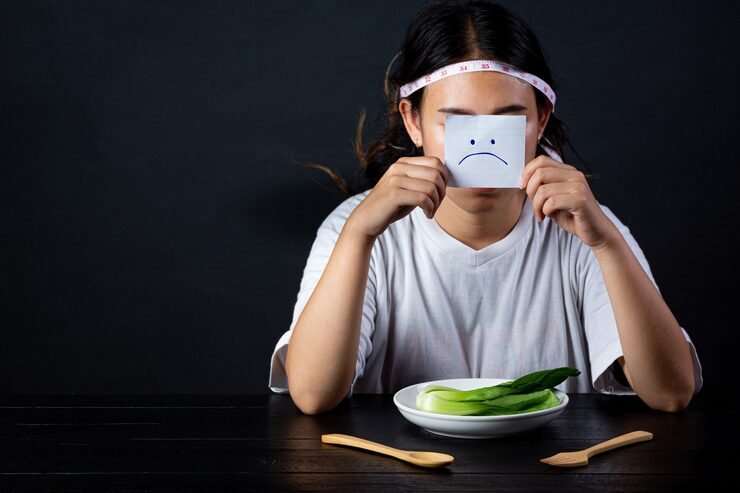
What Are Eating Disorders?
Eating disorders are serious mental health conditions that can affect a person’s thoughts, emotions, behaviors, and relationship with food and body image.
They can look very different from one person to another. Someone may severely restrict their food intake, while another person may experience repeated episodes of binge eating. Some individuals may become intensely focused on calories, weight, exercise, body shape, or appearance.
Eating concerns do not always look obvious from the outside. A person can struggle significantly even when their weight or appearance does not fit common stereotypes about eating disorders.
Eating disorders can affect people of all ages, genders, body types, and backgrounds.
Most importantly, struggling with food does not mean you are weak, lacking discipline, or doing something wrong. These behaviors often develop as ways of coping with difficult emotions, stress, insecurity, trauma, perfectionism, or a desire to feel in control.
Common Signs & Symptoms
Eating disorders can involve both emotional and behavioral changes.
Some common signs may include:
- Constantly thinking about food, calories, weight, or appearance
- Feeling intense guilt or shame after eating
- Frequently restricting food or skipping meals
- Following increasingly strict food rules
- Avoiding certain foods because they create fear or anxiety
- Episodes of feeling unable to control eating
- Eating large amounts of food in a short period of time
- Eating secretly or hiding food-related behaviors
- Repeatedly checking your weight or body
- Frequently comparing your body with other people
- Exercising excessively or feeling guilty when you do not exercise
- Using food to cope with stress, loneliness, sadness, or emotional discomfort
- Feeling disconnected from hunger or fullness signals
- Avoiding social events because food may be involved
- Experiencing significant anxiety around meals
- Feeling that your worth depends on your appearance or weight
You do not need to experience every symptom to deserve support.

Understanding the Relationship Between Food and Emotions
Food and emotions are often closely connected.
Stress, anxiety, sadness, loneliness, anger, boredom, shame, and other difficult emotions can influence eating behaviors. For some people, restricting food can create a temporary feeling of control. For others, eating may provide temporary comfort or relief from emotional distress.
The problem is that these behaviors may eventually create additional guilt, anxiety, shame, or emotional distress.
Understanding this cycle can be an important part of moving toward healthier patterns.
Instead of focusing only on the behavior itself, we can explore what may be happening underneath it.
What are you feeling?
What happened before the behavior?
What thoughts were going through your mind?
What were you trying to cope with or avoid?
These questions can help create greater awareness and understanding.
Body Image and Self-Esteem
Eating concerns are often closely connected to the way someone sees their body.
You may spend a significant amount of time criticizing your appearance, comparing yourself with others, checking mirrors, avoiding mirrors, changing clothing to hide your body, or worrying about how other people perceive you.
Social media and cultural expectations can also contribute to unrealistic ideas about appearance.
Over time, negative body image can affect confidence and self-worth.
We can work toward separating your sense of value from your appearance and developing a more compassionate way of relating to your body.
You deserve to see yourself as a whole person—not simply as a body that needs to look a certain way.
Perfectionism and Eating Disorders
Perfectionism can sometimes play an important role in eating-related struggles.
You may feel pressure to:
- Eat perfectly
- Follow every food rule
- Maintain a specific appearance
- Never make mistakes
- Meet extremely high expectations
- Control every aspect of your routine
- Compare yourself with an ideal version of yourself
When these expectations become rigid, even a small deviation can feel like failure.
Learning that progress does not require perfection can be an important part of developing healthier emotional patterns.
How Eating Disorders Can Affect Everyday Life
Eating disorders can gradually take up more mental and emotional space.
You may find yourself planning your day around food, avoiding restaurants, worrying about meals, exercising to compensate for eating, or constantly thinking about your body.